Info@educonnectbd.xyz
+8801953331789
Info@educonnectbd.xyz
+8801953331789


Are you a Bangladeshi student planning to study abroad in 2026? With the global education landscape shifting rapidly, emerging study abroad trends from Bangladesh highlight exciting opportunities and challenges. From rising student numbers to new destinations and visa changes, 2026 promises growth in outbound mobility for Bangladeshi students. According to recent reports, over 70,000 Bangladeshi students are already heading abroad annually, a figure set to increase as the middle class expands and economic recovery strengthens. This surge is driven by demands for quality education, better job prospects, and pathways to permanent residency (PR).
Studying abroad from Bangladesh in 2026 offers access to cutting-edge programs, scholarships, and international networks. But staying ahead means understanding key trends like affordable destinations, tech-focused courses, and policy shifts. In this guide, we’ll explore what to expect, with practical examples and tips for Bangladeshi applicants. Whether you’re eyeing STEM fields or business degrees, these insights will help you prepare.
At EduConnectBD.xyz, we specialize in guiding Bangladeshi students through these trends. With our free consultations, expert visa support, and partnerships with over 300 universities, we’re here to make your 2026 study abroad journey seamless. Let’s uncover the top trends!
The year 2026 marks a pivotal time for Bangladesh’s outbound student market. With GDP projected to rebound to around 5.1% after a slower 3.9% in 2025, more families can afford international education. UNESCO data shows outbound students tripled in the last 15 years, reaching about 52,799 in 2023, and experts predict continued growth due to middle-class expansion and graduate unemployment at home.
Key reasons these trends are crucial:
For Bangladeshi students, aligning with these trends means better employability and cultural exposure. Ignoring them could lead to missed scholarships or visa hurdles.
One of the biggest emerging study abroad trends from Bangladesh in 2026 is the continued rise in student outflows. Projections indicate over 70,000 students annually, up from 50,000+ in recent years, fueled by middle-class growth and economic recovery.
Why it’s emerging:
Examples:
EduConnectBD.xyz advantage: Our free profile evaluations help middle-class families identify affordable options, with 2,000+ students placed successfully.
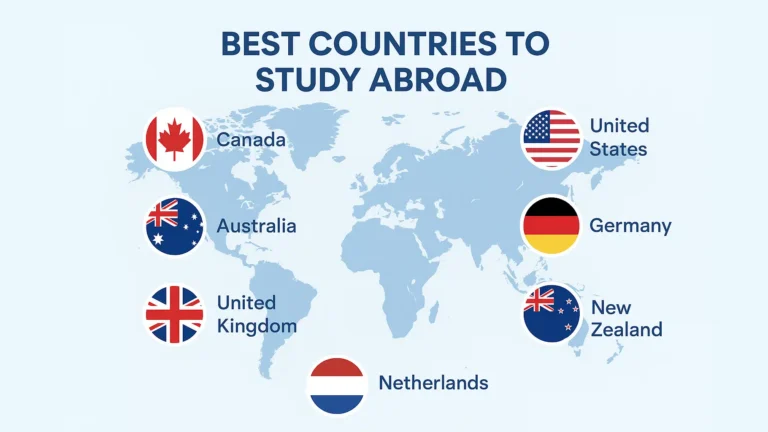
Traditional spots like the USA, UK, Canada, and Australia remain popular, but 2026 trends show Bangladeshi students favoring budget-friendly emerging destinations like Germany, Finland, Malaysia, Ireland, New Zealand, and Japan to combat rising costs and visa restrictions.
Points to watch:
Real examples:
At EduConnectBD.xyz, we shortlist emerging destinations based on your budget, with scholarship guidance to cut costs by up to 50%.
STEM (Science, Technology, Engineering, Math) courses, especially in AI, renewable energy, and cybersecurity, will dominate 2026 trends for Bangladeshi students abroad. Global job growth in these fields (20-30% annually) aligns with Bangladesh’s tech sector needs.
Why trending:
Examples:
EduConnectBD.xyz provides test prep for IELTS/GRE and SOP crafting for STEM applications, ensuring high admission rates.
With economic pressures like inflation (over 10% in 2025), 2026 will see more Bangladeshi students seeking scholarships and loans. Trends include targeted aid for underrepresented groups and high-demand fields.
Key aspects:
Examples:
Our advantage at EduConnectBD.xyz: Expert scholarship hunting and loan assistance, helping students save thousands.
Visa trends in 2026 will mix challenges and opportunities. While Canada tightens permits, the US resumes processing, and countries like Australia emphasize post-study work visas (1-3 years).
Emerging points:
Examples:
EduConnectBD.xyz offers visa interview prep and mock sessions, with a 98% success rate.
Transnational education (TNE) and hybrid learning are rising trends for 2026, allowing Bangladeshi students to earn foreign degrees without fully relocating, via branch campuses or online programs.
Why growing:
Examples:
At EduConnectBD.xyz, we guide on hybrid options through our global network.
Sustainability-focused courses in environmental science and public health will trend in 2026, driven by global climate goals and Bangladesh’s vulnerability to disasters.
Points:
Examples:
Emerging study abroad trends from Bangladesh in 2026 point to growth, diversification, and innovation. With rising numbers, affordable destinations, and skill-based programs, opportunities abound—but so do challenges like visas and costs. Stay informed to make smart choices.
Ready to ride these trends? Visit EduConnectBD.xyz for free consultations. Contact us at info@educonnectbd.xyz or our Khilkhet, Dhaka office. Your 2026 abroad adventure awaits!
One of the Best in Bangladesh – Student Recruiting Companies